About Us
The Pan-African Global Academy (PAGA) opened its doors on October 2010 in Oshiyie, a community between Kokrobitey and Bortianor in Western Accra, Ghana. After four years, PAGA has already demonstrated success in educating Ghana’s next generation of leaders.
Our mission is “to encourage students to apply the knowledge they learn in the classroom to solve local problems through the interactive STEAM (Science, Technology, Engineering, Arts and Mathematics) based curriculum.”
At PAGA, students can choose from three different concentrations - General Arts, Visual Arts, or Business - as well as a variety of electives. At the end of their studies, students take the West African Senior School Certificate Examination (WASSCE), which is the entrance exam for Ghanaian Universities.
PAGA prides itself on having small classes, project-based hands-on learning, weekly testing, and the teaching of citizenship. We had our first graduating class in 2014 with a total of 18 students, all of whom took the WASSCE. Currently, school enrollment stands at 48 students, and should expand after construction of the second floor.
PAGA is registered with the Ghana Educational Service(GES).
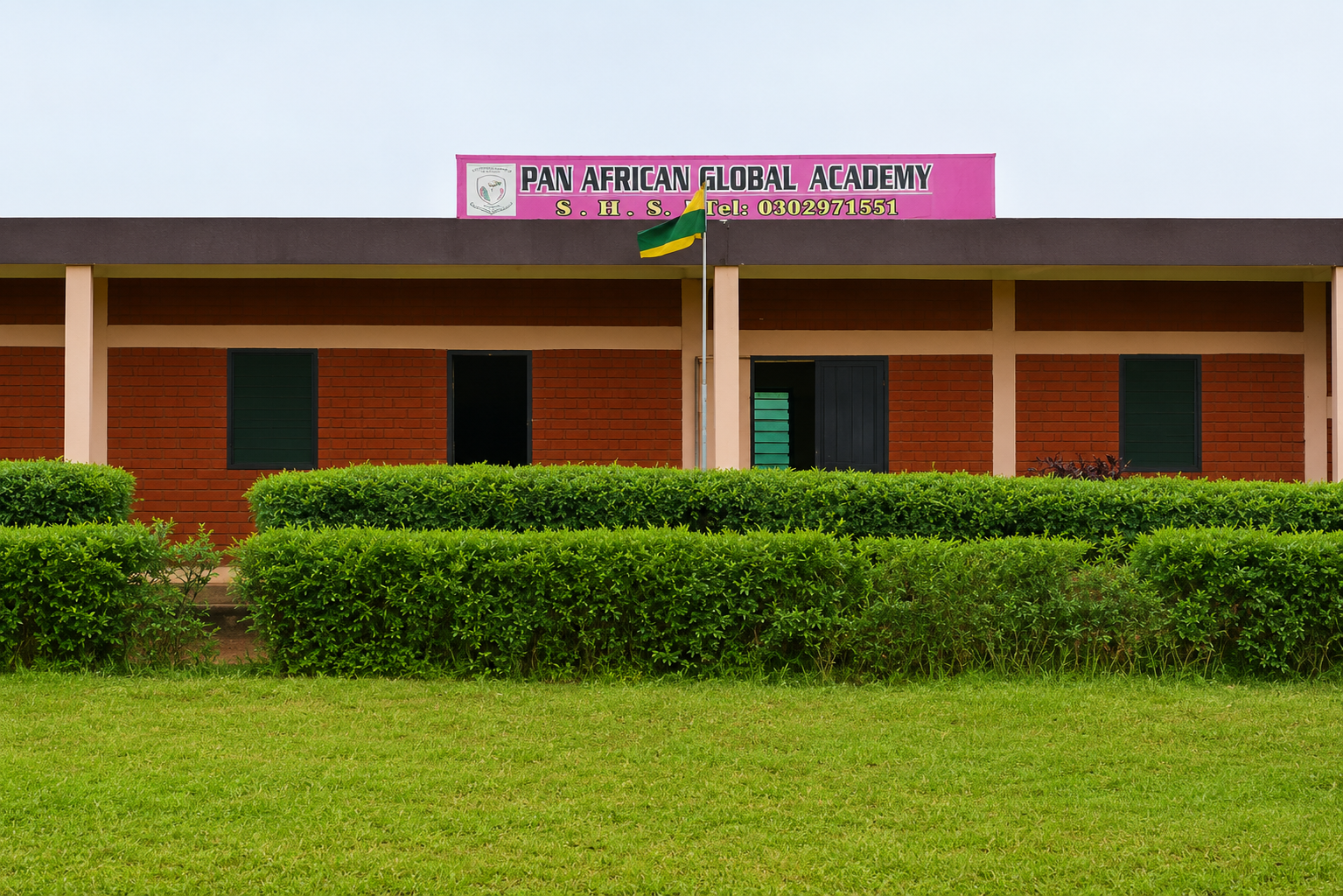

Founder's Statement
As an anthropologist, I started the school to study development from the inside. As a practitioner, it is extremely easy to criticize foreign aid and international development, but development is something humans do.
All countries are developing countries. So I wanted to know what was salvageable about collaborating across cultures and from very different positions of power.
The school was also a gift to the community for allowing me to study development from their vantage.
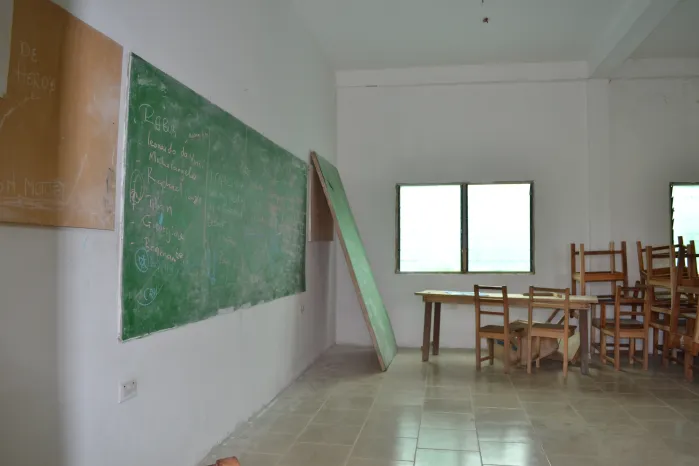
School Amenities & Sustainability
One of the main goals of PAGA is to create a sustainable campus. The school’s construction includes earth bricks, cross ventilation, and a wind turbine.
The earth bricks and cross ventilation keep the temperature of the rooms low, and the wind turbine allows the school to be independent of the electrical grid.
Read MoreWhy Ghana Needs STEAM
By Victor A. Atiemo-Obeng, PhD, FAIChE.The strong economic transformation taking place on the continent of Africa in countries like Ghana, with a remarkable 14.4 per cent growth of GDP in 2011, has captured world attention.
In the August 2012 issue of Africa Renewal, a publication by the Strategic Communications Division of the United Nations Department of Public Information, Kingsley Ighobor cited a projection by the World Bank that in addition to Ghana, countries including Liberia, Nigeria, Ethiopia, and the Democratic Republic of the Congo would be among the world’s economic growth leaders in 2012.
Read More